

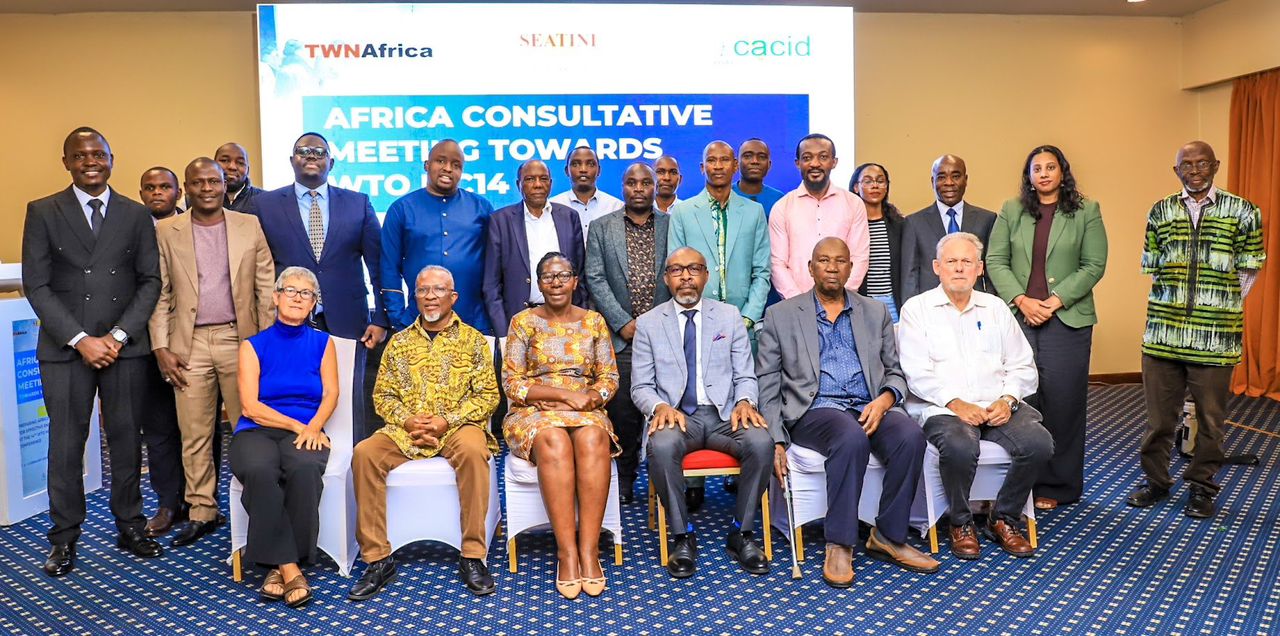
Ugandan civil society organisations have urged African governments to adopt a united negotiating position ahead of the 14th Ministerial Conference of the World Trade Organization (WTO), cautioning that escalating global trade tensions risk sidelining Africa’s development interests.
The call was made during a consultative meeting in Entebbe organised by SEATINI-Uganda to prepare African civil society and policymakers for the ministerial conference scheduled for next month in Cameroon.
Participants warned that increasingly assertive trade policies by the United States are reshaping global trade dynamics and pressuring other regions—particularly the European Union—to adopt similar protectionist measures, with far-reaching implications for developing economies.
Jane Nalunga, Executive Director of SEATINI-Uganda, said Africa’s influence in global trade negotiations depends on addressing internal barriers that weaken the continent’s bargaining power.
“We are reading about tariffs imposed by the United States on African countries, and we need to ask why,” Nalunga said.
“If we are talking about industrial policies, then Africa must influence what is happening globally. Why is it still so difficult to travel between African countries, or even from Africa to Europe?”
Nalunga emphasized the need for stronger coordination between civil society, policymakers, and regional institutions to forge common positions that promote sustainable and inclusive trade growth.
The upcoming WTO ministerial comes amid heightened global uncertainty, driven by the Russia–Ukraine conflict, tensions in the Middle East, and intensifying U.S.–China trade friction.
Since 2019, the United States has blocked appointments to the WTO Appellate Body, imposed unilateral tariffs, and bypassed dispute settlement rulings—moves critics argue have weakened the multilateral trading system and constrained developing countries’ options.
Professor Emeritus Jane Kelsey of the University of Auckland warned that U.S. actions are creating ripple effects across the global trading system.
“Other regions, particularly the European Union, are adopting protectionist measures, which affect developing economies worldwide,” Kelsey said.
“At the same time, several non-US powers are using this moment to push WTO reforms that weaken consensus-based decision-making and expand plurilateral agreements.”
Vahini Naidu, Programme Coordinator at the South Centre’s Trade for Development Programme, cautioned against rushed bilateral deals with the United States to ease tariff pressures.
“These tariffs are illegal tools designed to coerce compliance,” Naidu said. “Africa must pursue long-term, principled trade strategies rather than reacting under pressure.”
As preparations for the Cameroon ministerial gather momentum, civil society actors say the Entebbe meeting marks a critical step toward building a coordinated African position—one that enables the continent to negotiate from strength in a global trade system increasingly shaped by powerful economies.
